Nearly all move-related damage to a home happens on the route, not in the room. Entryway floors, stairwell walls, and the narrowest door frame take the hits because everything passes through them.
As top-rated movers in Chicago, IL, we carry Masonite for lobby floors and pads for door frames on every job. Protection goes down before any box moves, and furniture comes apart rather than getting forced through a doorway.
Walk your own route before the crew arrives and find the tightest point on it. It takes maybe five minutes, and you will be glad you did it.
The Damage Happens on the Route, Not in the Room
Furniture rarely gets dropped. What gets hit is the building itself, along the path that runs from the room to the truck. A sectional that cleared the living room catches the corner at the top of the stairs. A dresser scrapes the wall on a landing turn.
The entryway floor takes the worst of it, because every single item crosses it. Chicago, IL adds pressure to that route. Vintage three-flats have staircases built narrower than modern furniture.
High-rise lobbies are finished in tile and stone that show every scuff, and plenty of buildings hold a deposit against exactly this. A scraped wall is what costs you that deposit. That’s why our residential moving services put the coverings down before a mark ever shows up.
Floors Take the Most Traffic and the Most Damage
Hardwood scratches from grit rather than weight. Every trip in and out drags whatever is on the sidewalk across the boards. The fifth trip does more harm than the earlier ones, because by then the grit has built up.
Covering the main path with boards or runners removes the problem, above all in the entry, the hallway, and the stairs. A heavy piece makes it worse, which is why moving a piano on a hardwood floor always calls for boards under the dolly.
Carpet fails differently. It holds water and salt instead of scratching, so a February move leaves a gray track down a hallway that was clean at breakfast. Lay protection on carpet too. If the weather is wet, keep a mop by the door and use it during the move rather than at the end. Building management judges the lobby by how it looks at five o’clock.
Door Frames, Corners and the Narrowest Point on the Route
Walk your own route before the crew arrives and find the tightest spot. It is usually a doorway near a turn, or the top of a staircase where the handrail eats into the width. That single point decides whether the wardrobe goes through intact or the wall gets gouged. Knowing about it in advance lets a crew plan around it, rather than improvise with a heavy item already in their hands.
Padding the frame solves most of it. The rest gets solved by disassembly, which is the step people skip and then regret. Bed frames, table legs and wardrobes come apart at the old place and go back together at the new one. The same crew that loaded the piece rebuilds it, and spending twenty minutes on a table leg beats repairing plaster, and costs a good deal less.
Worried about a tight stairwell or a doorway that barely clears your furniture? Give us a call at (773) 761-8330, and we’ll take a look at the route with you before it turns into a repair bill.
What Gets Protected Before Anything Moves
Protection is not one product laid at the door. It is a set of coverings matched to the surfaces on the route, put down in order, before a single box leaves a room. The entry goes at the start because it takes every trip. The stairs go next, then the pinch points, then the elevator if the building has one.
Most of this comes with a professional crew. If you are moving yourself, a hardware store covers the list for less than the cost of one repaired wall. That covers the building, and what you carry through it is a bit of a separate job, handling fragile items included.
- Board or runners across entry floors, hallways and the full staircase
- Pads on door frames at every pinch point on the carry route
- Corner protection on stairwell turns and exposed wall edges
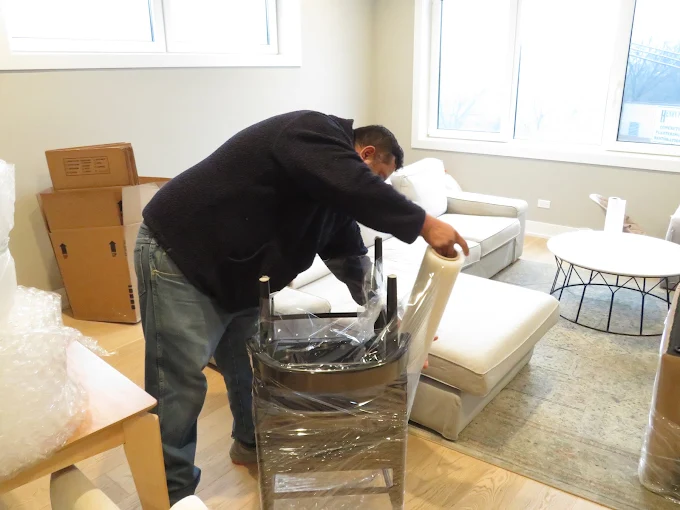
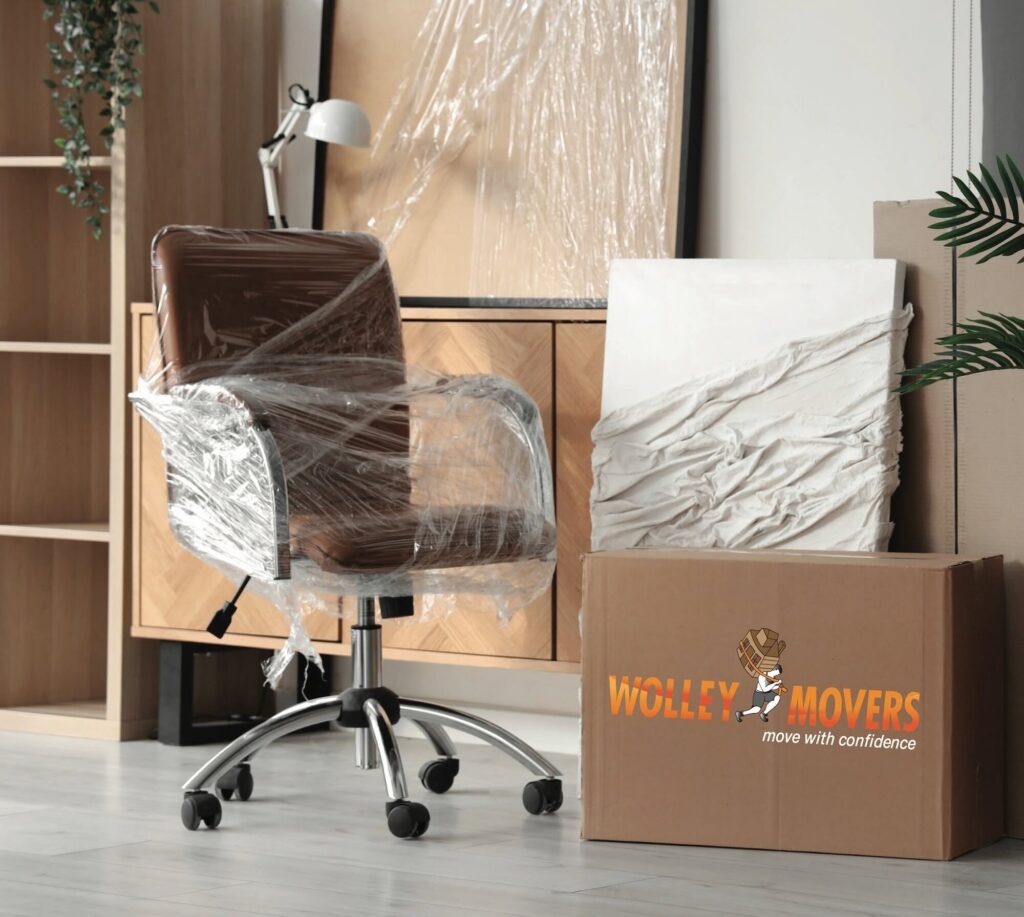
- Blankets and shrink wrap on upholstered pieces, so furniture does not mark the wall
- Elevator pads, which most buildings supply on request and many require
Lay all of it before the walkthrough ends, not once the opening item is already moving.
Heavy and Awkward Items Deserve Their Own Plan
A piano, a gun safe, or a stone-topped table is not a heavier dresser. Concentrated weight on a small footprint cracks a floorboard or dents a threshold. The risk sits in the moving rather than in the resting. Uprights, baby grands and safes get handled with dollies, straps and boards, and those boards protect your floor as much as they move the load.
Point these out during the walkthrough so the crew can plan the load order. An awkward item taken early, while the route is clear and nobody is tired, goes better than the same item taken last. Say so when you book rather than on the morning, because the right equipment has to be on the truck before it leaves.
Document the Condition Before and After
Photograph the entryway, the hallway walls, the stair treads, and the lobby before anything moves. Do the same at the new place. Five minutes of this settles almost every disagreement that could come up later. That includes one with a building manager, a landlord, or whoever holds your deposit.
If something gets damaged while we are handling it, tell the office as soon as you find it. A mark reported the same day is a straightforward conversation. The same mark raised three weeks later is much harder for everybody, and by then the evidence about when it happened has gone. Our crew lead flags anything that comes up on site, and the expectation runs both ways.
Walk both homes once the truck is empty, with the protection still down. Look at the route rather than the rooms. Whatever you need to raise will be there.
Have questions about protecting your floors and frames, or just want to talk through the plan first? Contact us at (773) 761-8330, and we’ll help you figure out the right next step. We’re here Monday to Friday, 8:00 AM to 6:00 PM, and Saturday, 8:00 AM to 5:00 PM.
Related Topics: