The moving mistakes that cost the most in Chicago are logistical rather than physical. A missed elevator window or an unplanned curb adds hours to a job that was priced by the hour. We dispatch reliable movers from 1040 N Cicero Ave on the West Side, so our crews work around these constraints daily.
Our estimates are built from the inventory a customer gives us, and the crew lead flags any overrun on site. Five mistakes cause most of the damage, you know. Every one of them gets settled on a phone call days before the truck arrives.
City Moves Fail for Reasons Suburban Moves Do Not
Dropping a sofa is not what wrecks a Chicago move. What wrecks it is a truck circling for twenty minutes because nobody reserved curb space. Or a crew standing in a lobby because the elevator was booked to somebody else from noon. Neither has anything to do with how carefully the furniture gets handled, and both run on the clock you are paying for.
We charge by the hour on our local moving services, and the clock starts when the crew arrives. Time lost to a logistics problem is money rather than just an inconvenience. None of it shows up as damage or breakage, which is why people rarely see it coming. The mistakes below are the ones we watch households make most often.
Booking on the Date Everyone Else Is Moving
Chicago moving demand clusters around the May 1 and October 1 lease turnovers. Saturdays in those weeks go first. Picking one of those dates late leaves you choosing between an afternoon start and a company you have not checked out. The date itself is not the mistake, but leaving it until three weeks out is.
Shifting a move by two days often changes the whole shape of the day. A Tuesday mid-month means better crew availability, easier parking, and a freight elevator nobody else wants.
If your lease dates are fixed, the fix is lead time rather than flexibility. Knowing when to book a moving company for your season helps, and short notice work is often possible outside those peaks, so calling still beats assuming you are out of luck.

Treating Building Access as an Afterthought
Most downtown and North Side buildings will not let a crew past the loading dock without a certificate of insurance. That certificate has to name the building and its management company as additional insured.
People find this out on moving morning far more often than they should. We issue certificates straight to property management, but only once we have the manager’s contact and the building’s requirements.
That information belongs in the booking conversation rather than in a phone call at eight in the morning. Freight elevators are the other half of it. Buildings hand out two- or four-hour windows, and missing one can push a move to a different day. Tell your mover the slot your building gave you, and the crew gets scheduled to fit it.
A thirty-second-floor condo loaded inside the reservation is a normal day. The same condo loaded after the window closed is a negotiation with a manager who has already gone home.
| Mistake | What it actually costs | The fix |
| No parking or loading plan | Extra hours of long carries | Check whether the block needs a permit |
| Skipping the certificate of insurance | A crew that cannot start | Send management’s contact when you book |
| Missing the elevator window | A rescheduled move | Give the mover your reserved slot |
| Vague inventory over the phone | An estimate that does not hold | Send photos or book a video walkthrough |
| Packing unfinished on the morning | Crew time spent waiting | Finish the night before or book packing |
Every row in that table is settled on a weekday phone call, not on moving day. Parking is the one most people underestimate, and the parking regulations on a block can change what a crew is actually allowed to do.
Not sure which of these applies to your building in Chicago? Give us a call at (773) 761-8330, and we’ll tell you what the move actually needs.
Describing the Move Instead of Showing It
An estimate is built from the inventory you give, so it holds for as long as that inventory does. A two-bedroom with a basement full of boxes is not a two-bedroom, really. A walk-up with a long carry from the door is not the same job as a unit beside the elevator. When there is more to move than we were told, the job runs longer, and the cost rises with it.
Our crew lead raises that with you on site, before the extra time gets spent. Photos fix this in about five minutes. A video walkthrough fixes it better, because it catches the garage, the storage locker, and the closet you forgot. Anyone quoting a number without asking what is in the house is guessing, and a guess is not a quote.
Ask what the estimate assumes, then check the assumption against your own home.
Underestimating What Packing Takes
The single most common reason a move runs long is packing that was not finished. Kitchens are the usual culprit, followed by the garage and the back of the closet. A crew standing around while you wrap glassware is a crew you are paying to wrap glassware. Our packers would have done it faster and with better materials.
Full packing means the team arrives the day before, so loading starts early. Partial packing covers the kitchen and the fragile items only, which suits most households.
Either one removes the morning scramble entirely. If you pack yourself, finish the night before and label by room rather than by contents, since the crew reads those labels to decide where each box lands at the other end.
Hiring on Price Alone
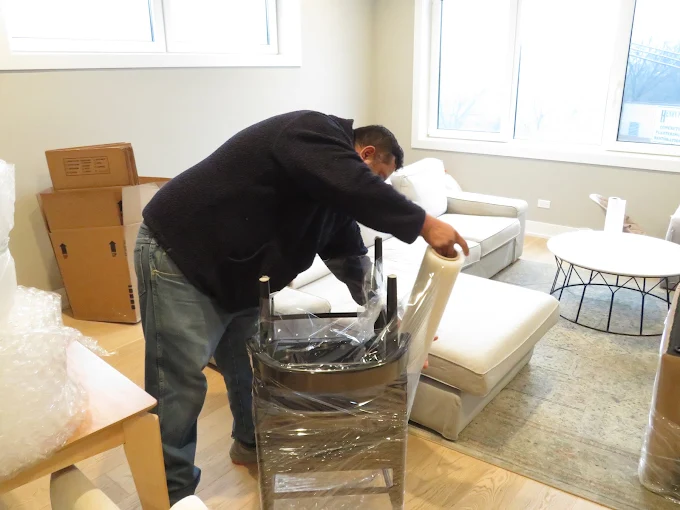
The cheapest quote is often the one that left something out. Materials we cannot reuse are billed on top of the hourly rate, covering boxes, tape, and the shrink wrap that protects your furniture. A quote that never mentions materials has either absorbed them or forgotten them. Ask which it is.
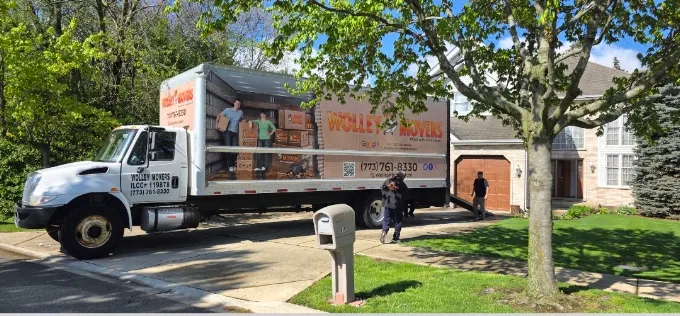
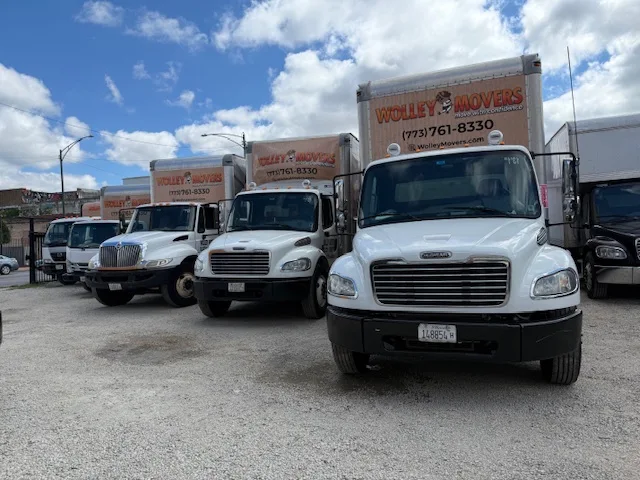
Ask who is actually showing up too. Our movers are our own employees, and we never subcontract, so the people who load the truck are the people who unload it. That holds whether the job is a studio or a local move across three neighborhoods. On a day when something gets scratched, the difference between one accountable team and two is the entire conversation.
Price matters in Chicago, IL, as it does anywhere. Price without knowing what sits behind it is how people end up with a bad moving story.
Give us the date, the address, and a rough inventory, and we’ll send a written estimate before anything is booked. Just contact us, and we’ll help you figure out the right next step. You can reach us at (773) 761-8330 or stop by 1040 N Cicero Ave, Chicago, IL 60651.
Related Topics: